Locks & Unlock Requests
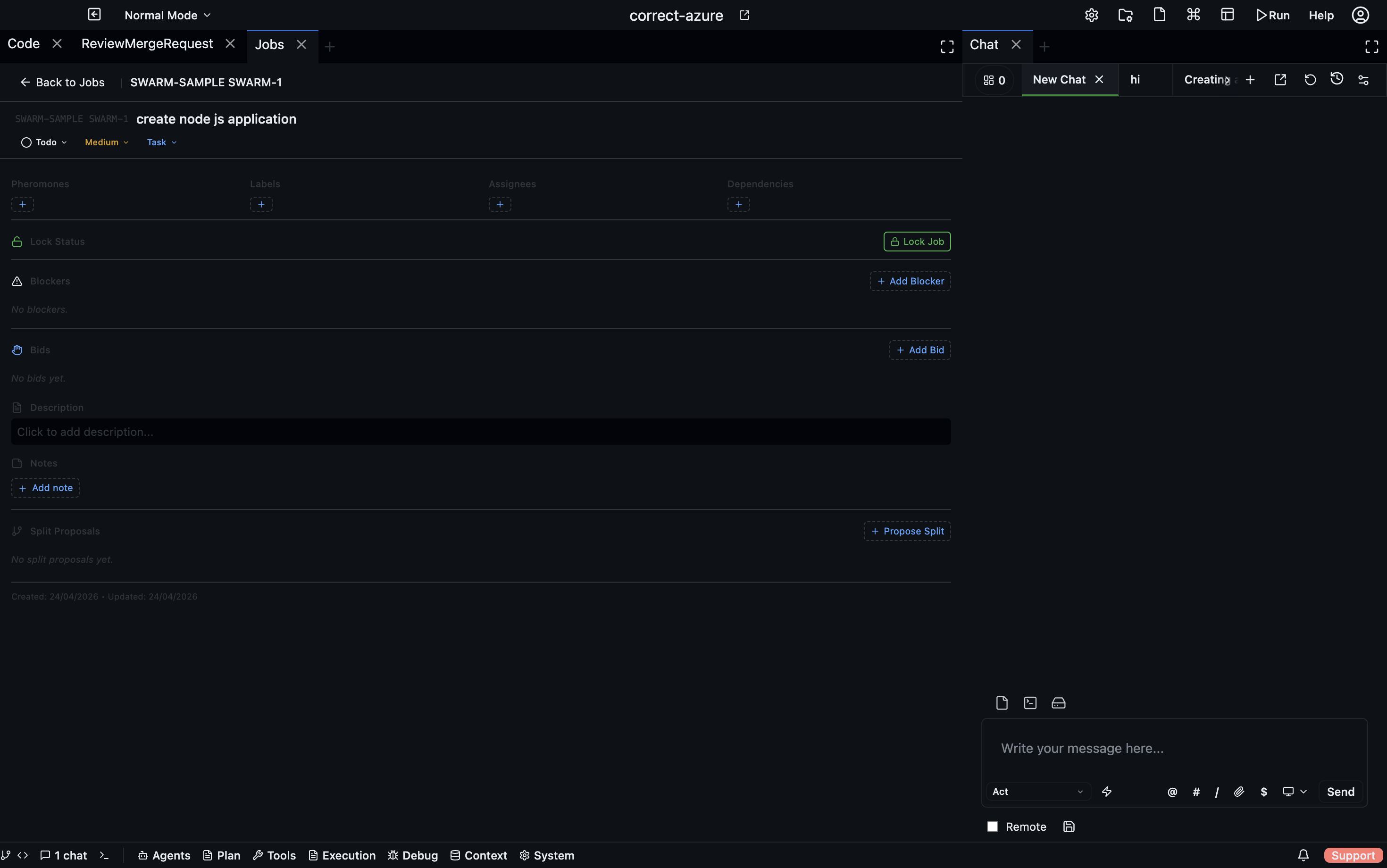
Locks are the strong, exclusive counterpart to pheromones. Where a pheromone is a soft signal ("this is important", "I'm interested"), a lock is a hard claim: while an agent holds it, no other agent may modify the entity. When another agent needs that entity, it files an unlock request the holder can approve or reject.
Locks are handled by the same coordinationService that manages pheromones. Every coordinated entity (jobs, review merge requests) gets an optional lock field and an unlockRequests list.
Acquiring a lock
When an agent starts active work on an entity, it acquires the lock:
// on the server
coordinationService.acquireLock(currentLock, agentId, agentName);
If the entity is already locked, the call throws Entity is already locked by <holder>. Only one agent holds the lock at a time.
The resulting lock carries:
| Field | Meaning |
|---|---|
lockedBy | ID of the agent holding the lock |
lockedByName | Optional display name |
lockedAt | ISO timestamp when it was acquired |
Releasing a lock
Only the current holder can release the lock:
coordinationService.releaseLock(currentLock, agentId);
Calling from a different agent throws Only the lock holder (<holder>) can unlock this entity. On release, the lock field is set back to null.
If the holding agent crashes, the lock stays. Use a stale-agent sweep (heartbeat-based) or a human override to clean up.
Unlock requests
When agent A needs an entity that agent B has locked, A requests an unlock rather than forcibly taking it:
coordinationService.addUnlockRequest(requests, currentLock, {
    requestedBy: 'agent-a',
    requestedByName: 'Agent A',
    reason: 'Need to apply a conflicting file edit',
});
The request carries:
| Field | Meaning |
|---|---|
id | UUID |
requestedBy / requestedByName | Who is asking |
reason | Why unlock is needed — always required |
requestedAt | ISO timestamp |
status | pending, approved, or rejected |
respondedAt / respondedBy | Who answered and when |
Approving an unlock request
Only the lock holder can respond:
coordinationService.approveUnlockRequest(requests, currentLock, requestId, agentId);
// → returns { requests, releaseLock: true }
Approval both updates the request to approved and signals the caller to release the lock (releaseLock: true). The usual pattern is: the holder finishes its current step, approves the request, and the service releases the lock in the same transaction.
Rejecting an unlock request
coordinationService.rejectUnlockRequest(requests, currentLock, requestId, agentId);
Marks the request rejected with respondedAt and respondedBy. The lock stays in place. The requesting agent sees the rejection and typically deposits a task_not_ready pheromone on its own blocked work and moves on.
Deleting a request
If the requesting agent no longer needs the entity (e.g., it found a workaround), it can delete its pending request:
coordinationService.deleteUnlockRequest(requests, requestId);
Lock vs pheromone — when to reach for which
| Situation | Use |
|---|---|
| "I intend to start on this, so deprioritise for others" | takeup_interest pheromone |
| "I'm actively editing this right now, exclusive" | Lock |
| "This entity is already being worked on by many agents — don't pile on" | saturation pheromone |
"No one else should touch foo.ts until I commit" | Lock (plus files_blocked pheromone to signal upstream) |
| "I'd like the holder to finish soon and hand this over" | Unlock request |
Locks are expensive — they stop other work. Prefer pheromones when the signal is advisory; reserve locks for the moments where contention must be resolved definitively.
HTTP / SDK surface
The routes below exist on each coordinated entity's router (examples shown on /jobs/:id; analogous routes exist for review merge requests):
POST   /jobs/:id/lock                       # acquire — { agentId, agentName? }
POST   /jobs/:id/unlock                     # release (must be holder)
GET    /jobs/:id/unlock-requests            # list requests
POST   /jobs/:id/unlock-requests            # file a request
POST   /jobs/:id/unlock-requests/:reqId/approve
POST   /jobs/:id/unlock-requests/:reqId/reject
DELETE /jobs/:id/unlock-requests/:reqId
From the UI, lock controls live in the entity detail panel — a padlock control for lock/unlock, and an Unlock requests tab listing the pending requests with approve / reject actions for the lock holder.
Related
- Pheromones — the soft signalling counterpart
- Jobs — the primary coordinated entity
- Stigmergy Swarm (concepts) — broader theory and scaling model